Vodafone Qatar: Agent Platform
How I rebuilt a branch agent's workspace around their real workflow and cut handling time by ~40%
The tool meant to help agents serve customers was the reason customers were waiting.
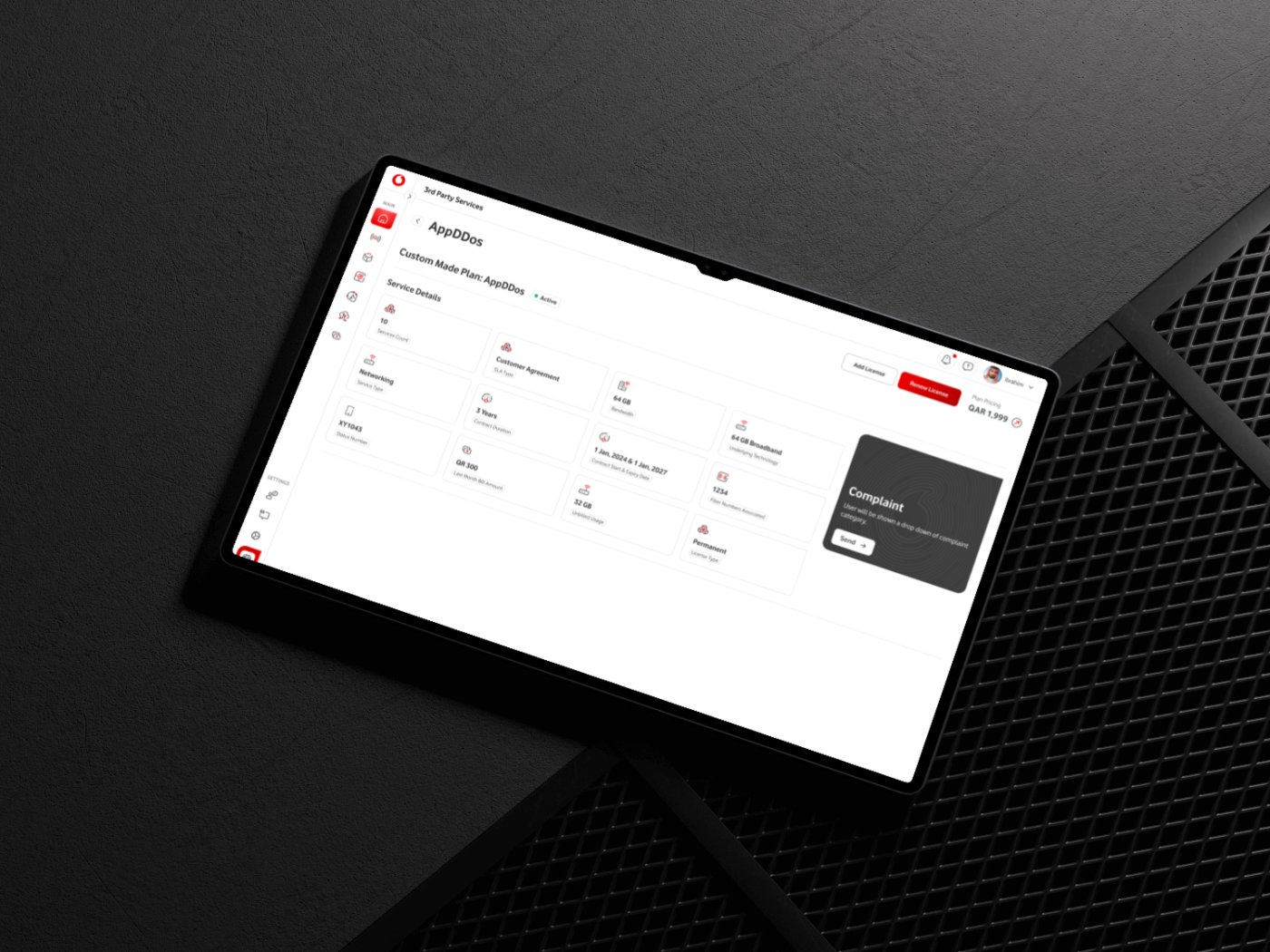
One of six designers on the revamp. I owned the mobility and third-party service modules and the responsive system, on a design system the team shared.
Role
Product Designer
Category
Enterprise / Telecom
Timeline
6 months
50%
Fewer screens per customer visit
~35%
Reduction in agent errors on sensitive operations
2×
Faster onboarding for new agents
100%
Alignment with the new CRM workflows
“The redesigned platform turned the agent's tool from an obstacle into an advantage.”
Client feedback
Overview
The contextVodafone Qatar's branch agents are the human face of the company. Every day, customers walk into a store to activate a plan, resolve a billing issue, block a lost SIM, or upgrade their service, and the agent behind the counter needs to handle it all quickly, accurately, and with the customer standing right in front of them.
The internal tool agents relied on had grown outdated. It no longer matched how agents actually worked, and it wasn't aligned with Vodafone Qatar's new CRM and operational workflows. Our team of six designers was brought in to revamp the entire branch agent platform over six months, rebuilding it around the agents' real workflows and the new CRM, covering everything from viewing and activating plans to blocking and unblocking SIMs and handling BPO operations end to end.
Challenge
The problemDesigning for branch agents is fundamentally different from designing a consumer app. The agent works under time pressure, with a live customer watching, often switching between multiple tasks for the same customer in a single visit. The old system created friction at exactly the wrong moments:
The system didn't match real workflows
The old tool was built around legacy processes. As Vodafone Qatar introduced new workflows and migrated to a new CRM, agents were forced to work around the software instead of with it, jumping between screens, duplicating data entry, and relying on memory and workarounds.
Core tasks were scattered
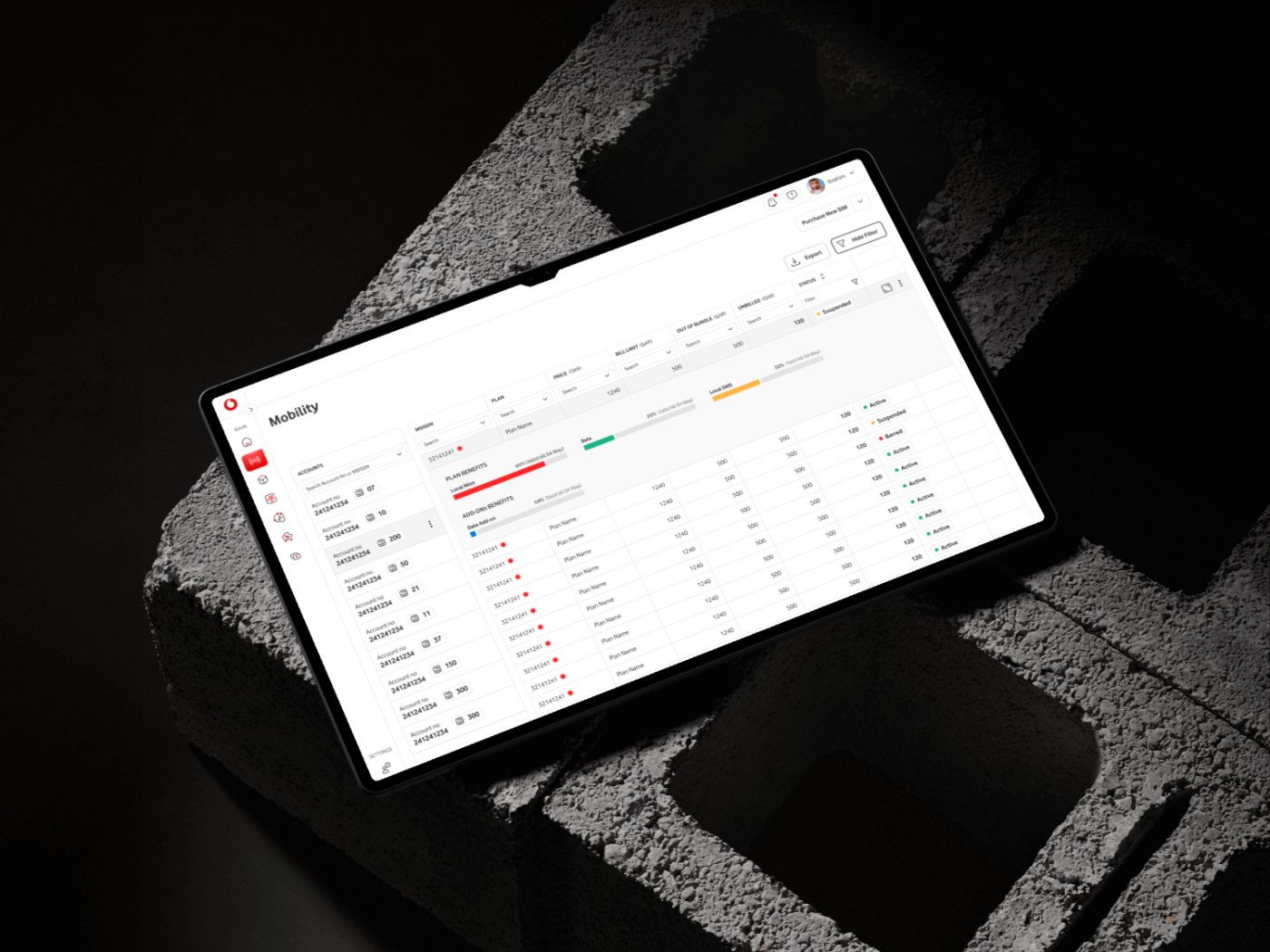
Everyday actions, viewing a customer's plans, activating a new plan, blocking or unblocking a SIM, lived in different corners of the system with inconsistent patterns. Simple requests took longer than they should, and every extra minute was a minute a customer stood waiting.
High cognitive load, high error risk
In telecom operations, mistakes are costly: activating the wrong plan or blocking the wrong SIM directly impacts a customer. The old interface offered little confirmation, poor context, and weak safeguards, putting the burden entirely on the agent.
Onboarding new agents was slow
Because the system was unintuitive, new branch staff needed long training periods before they could serve customers confidently.
The core problem: agents needed a single, fast, reliable workspace built around how they actually serve customers, fully aligned with the new CRM and workflows.
Approach
The processGrounding the design in real agent workflows
We mapped how agents actually work: the most frequent customer requests, the sequence of actions in a typical visit, and where the old system slowed them down. With Vodafone Qatar's new workflow and CRM definitions, this became the blueprint, the system was rebuilt around agent journeys, not internal system structure.
A unified customer view
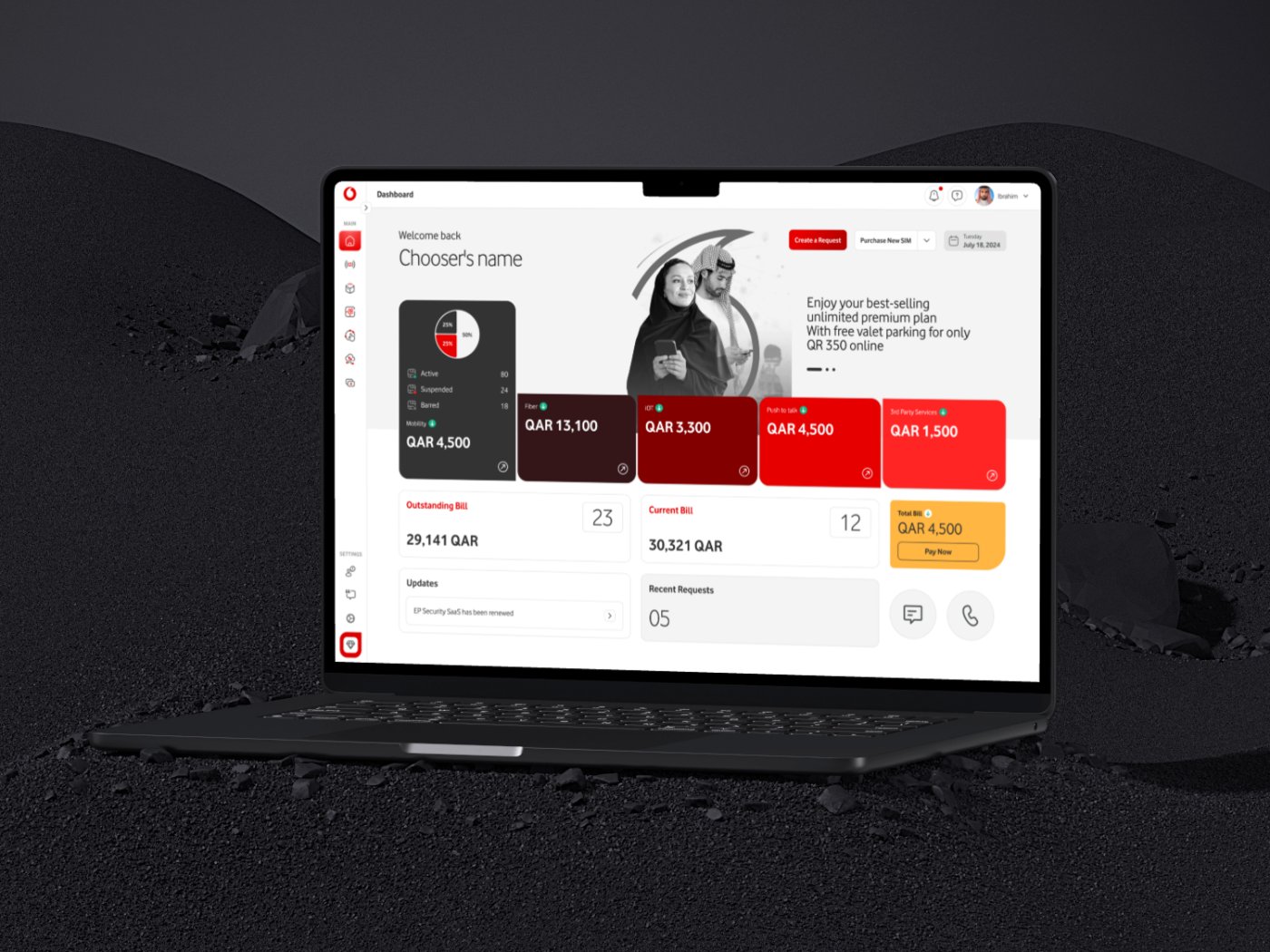
We designed a single customer profile as the anchor of the experience. From one place, an agent can see the customer's active plans, SIM status, account details, and history, and act on them directly. No more hunting across modules to answer a simple question.
Streamlined core operations
The highest-frequency tasks were redesigned as fast, guided flows: viewing and comparing plans, activating plans with clear confirmation, blocking and unblocking SIMs with built-in safeguards, and end-to-end BPO operations aligned step by step with the new CRM.
Designing for speed and safety
We optimised for speed, fewer clicks, fewer screens, clear defaults, while adding safety at the moments that matter: confirmations, status feedback, and clear error states, so agents always know what happened and what to do next.
Responsive design for every context
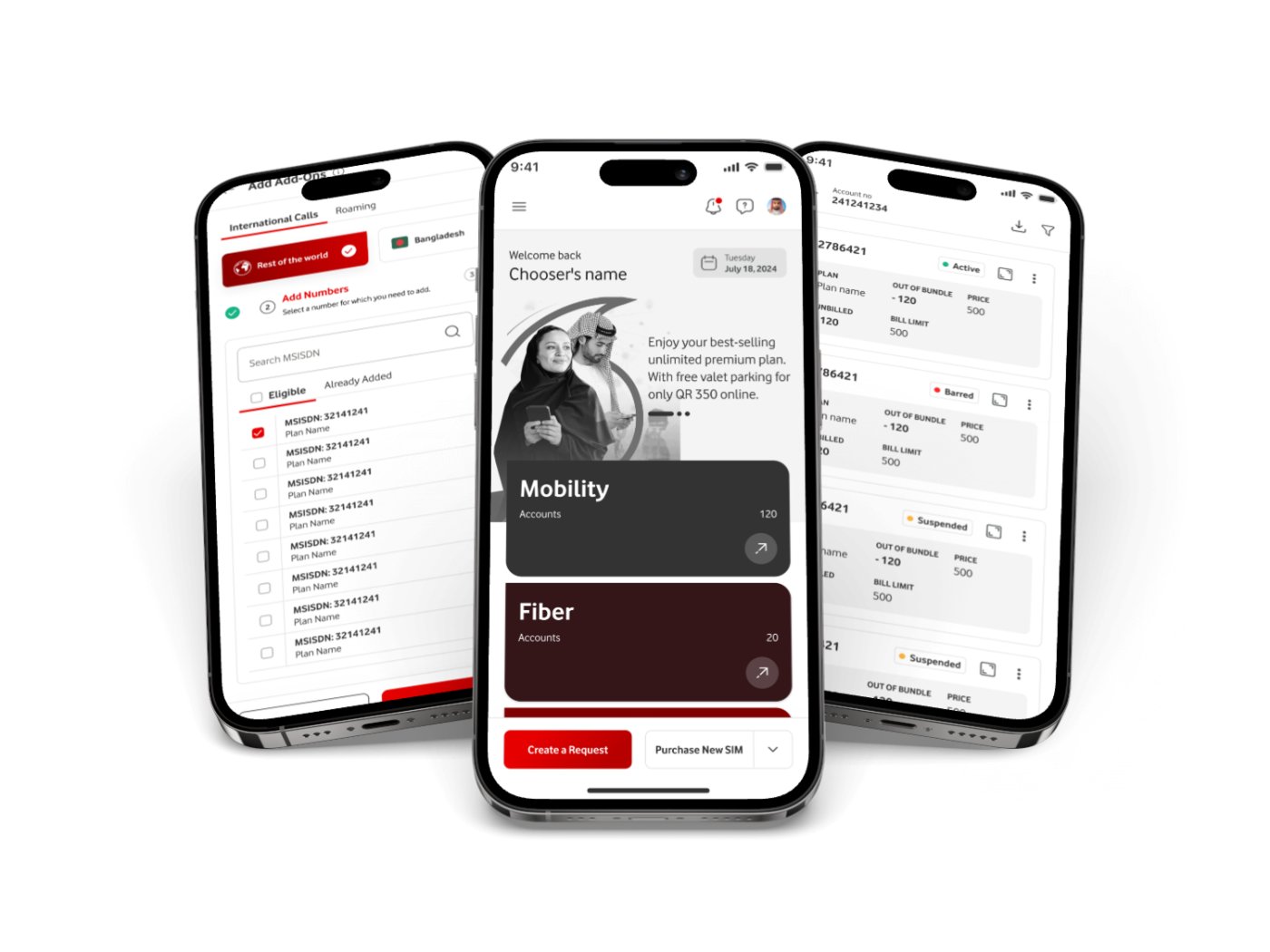
Agents also assist customers on the floor and on smaller screens, so we designed the entire platform to be fully responsive. Complex operations like plan activation and SIM management were carefully restructured for tablet and mobile, keeping the same speed and safety on every device.
Collaboration at scale
Six designers worked in parallel across different modules. We stayed consistent through a shared design system, regular critiques, and close alignment with Vodafone Qatar's product and CRM teams, so a flow designed by one designer felt identical to one designed by another.
Outcome
The resultIn six months, our team delivered a fully revamped branch agent platform, redesigned end to end around Vodafone Qatar's new workflows and CRM:
One unified workspace replacing a fragmented legacy system
agents view plans, manage SIMs, activate services, and complete BPO operations from a single, coherent experience.
Faster customer service
the most common tasks were redesigned as short, guided flows, cutting the time customers spend waiting at the counter.
Fewer errors on critical actions
safeguards and clear confirmations around sensitive operations like SIM blocking protect both agents and customers.
Full CRM alignment
the interface now mirrors Vodafone Qatar's new operational processes, eliminating the workarounds agents had relied on.
A fully responsive experience
the platform works across desktop, tablet, and mobile, letting agents serve customers anywhere in the branch.
Consistency at scale
a shared design system kept the work of six designers unified into one seamless product.
The redesigned platform turned the agent's tool from an obstacle into an advantage, letting Vodafone Qatar's front-line staff focus on the customer, not the software.
Key learnings
What I took awayA shared design system is how six designers ship as one, consistency came from a common component library.
Model the real workflow, shadowing branch agents surfaced steps no requirements doc captured.
One workspace beats many tools, consolidating modules cut context-switching for agents dramatically.
Design for the counter, not the desk, in-store speed and glanceability drove every layout decision.
More projects
S&P Global: CIQ PRO Dashboard
S&P Global: Chart Explainer
Etisalat: e&money
Contact me
Let's work together
Have a project in mind, or just want to say hi? I'm always open to new conversations.